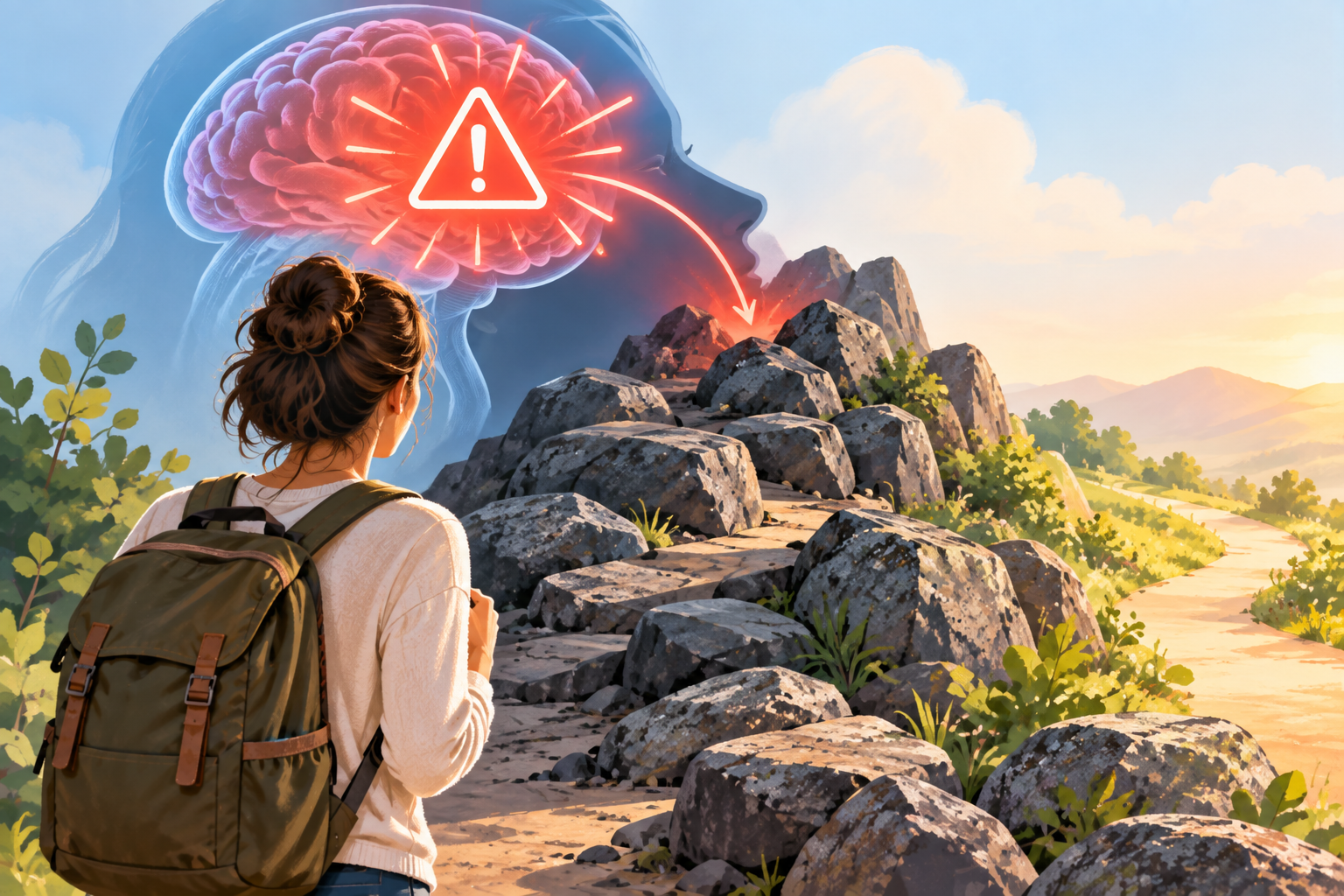
There are few words people use to describe themselves that carry more weight than the word Broken.
Unlike saying, “I’m having a hard time,” or, “I’ve been through a lot,” calling yourself broken is not simply describing your circumstances. It is describing your identity. It suggests that something deep inside of you has been permanently damaged, that you no longer work the way you were supposed to, and that somehow everyone else received the pieces that you are missing.

If you’ve ever caught yourself thinking, “Why do I feel broken?” you are not alone. It is one of the most common yet least discussed beliefs people bring into counseling. Sometimes they say the word out loud. More often, they describe it in different ways. They tell me they feel damaged, ruined, too much, not enough, permanently changed, beyond repair, or like they’ll never be the person they used to be. Although the words differ, the message underneath is often the same: “I don’t think I’ll ever be whole again.”
The encouraging truth is that feeling broken and being broken are not the same thing. Many people spend years believing there is something fundamentally wrong with them when, in reality, they are carrying wounds that have never been given the opportunity to heal. Wounds can change how we think, how we feel, and how we relate to others, but they do not change our value. Understanding that distinction is one of the first steps toward reclaiming hope.
The Difference Between Being Broken and Being Wounded
One of the greatest lies emotional pain tells us is that what happened to us has become who we are. It is an easy conclusion to reach because pain has a way of coloring everything it touches. When someone has experienced repeated rejection, betrayal, abuse, trauma, or significant loss, those experiences naturally leave emotional scars. Over time, it becomes difficult to separate the wound from the person carrying it.
Imagine someone who breaks their leg. No physician would ever say, “You are a broken person.” They would simply acknowledge that the individual has a broken bone. The injury is real, it deserves treatment, and healing may take time, but the injury does not become the person’s identity. Strangely, we rarely extend that same compassion to emotional pain. Instead, we often conclude that because our hearts have been wounded, we must be broken.
This subtle shift in language matters more than we realize. Saying, “I have been deeply wounded,” leaves room for healing. Saying, “I am broken,” implies permanence. One describes a condition. The other becomes an identity. When we confuse the two, we unknowingly begin living according to a story that our pain has written rather than the truth about who we are.

How Do People Begin Feeling Broken?
Very few people wake up one morning and suddenly decide they are broken. More often, the belief develops slowly through the accumulation of painful experiences that seem to reinforce one another over time. A difficult childhood, a painful divorce, years of anxiety, a traumatic accident, betrayal by someone trusted, the death of a loved one, addiction within the family, or repeated experiences of failure can all leave a person wondering if they will ever feel like themselves again.
The human brain is constantly trying to make sense of suffering. When painful events occur, especially events we cannot control, our minds instinctively search for an explanation. Sometimes we reach healthy conclusions such as, “That was incredibly painful,” or, “Life isn’t always fair.” Other times, however, we personalize the pain. Instead of asking what happened, we begin asking what must be wrong with us. The focus shifts from understanding the event to questioning our identity.
This process often happens outside of conscious awareness. No one sits down and intentionally decides to believe they are damaged beyond repair. Instead, the belief grows quietly through hundreds of small conclusions. Every disappointment, every rejection, every setback, and every painful memory begins adding another piece to a story that says, “This keeps happening because something is wrong with me.” Eventually, the story becomes so familiar that it feels less like a belief and more like an unquestionable fact.
Pain Changes the Way We See Ourselves
Emotional wounds do more than create sadness or anxiety. They change the lens through which we interpret our lives. Once someone begins believing they are broken, they naturally start viewing new experiences through that belief. Success is dismissed as luck. Compliments feel insincere. Healthy relationships become difficult to trust because they contradict the story the person has believed for years.
This process is similar to looking through a window with a crack running across the middle. The crack does not change the world outside, but it changes how everything appears. In the same way, the belief “I am broken” begins influencing how we interpret ourselves, our relationships, and even our future. Small setbacks become confirmation that healing is impossible. Moments of emotional struggle become proof that nothing has changed. Instead of noticing progress, we become experts at noticing evidence that reinforces the belief we’ve carried all along.
Unfortunately, this cycle becomes self-perpetuating. The more convinced we become that we are broken, the more likely we are to notice information supporting that conclusion while overlooking evidence that challenges it. Psychologists refer to this tendency as confirmation bias, and it quietly strengthens negative core beliefs over time. The result is that we become increasingly certain of something that may have never been true in the first place.
When Survival Becomes Your Identity
One of the most overlooked effects of trauma is that it often transforms survival strategies into identity statements. Perhaps you became fiercely independent because the adults in your life were unreliable. Maybe you learned to hide your emotions because expressing them led to criticism or rejection. Some people became perfectionists because mistakes felt unsafe. Others became people-pleasers because keeping everyone happy reduced conflict at home.
These strategies were not signs that you were broken. They were signs that your brain was doing everything it could to help you survive difficult circumstances. The tragedy is that many people continue using those same strategies long after the original danger has passed. What once protected them begins limiting them. Instead of recognizing these behaviors as learned survival skills, they begin viewing them as evidence that something is fundamentally wrong with who they are.
Therapy often helps people make this distinction for the first time. They begin realizing that many of the behaviors they have criticized in themselves were actually brilliant attempts by a younger version of themselves to stay emotionally safe. Understanding this does not mean those behaviors are still helpful today, but it replaces condemnation with compassion. Healing becomes much more possible when we stop attacking ourselves for the ways we once survived.

The Hidden Belief Beneath “I’m Broken”
When someone repeatedly says they feel broken, there is often another belief quietly hiding underneath the surface. It might sound like, “I can’t be fixed.” “No one could really love someone like me.” “I’ve been through too much.” “I’ll never get back to who I used to be.” Although these thoughts appear different, they all point toward the same painful conclusion—that hope is no longer available.
This is why simply telling someone, “You’re not broken,” rarely changes anything. Their mind immediately begins listing years of evidence supporting the opposite conclusion. Healing requires more than positive words. It requires patiently examining where the belief began, how it has been reinforced over time, and whether it accurately reflects reality. Only then can a healthier story begin replacing the old one.
Perhaps the most hopeful realization is that your wounds may explain many of your struggles, but they do not define your identity. There is an enormous difference between saying, “I have experienced brokenness,” and saying, “I am broken.” One acknowledges pain. The other surrenders identity to pain.
That distinction may seem small, but it has the power to change the direction of an entire life.
Shame Doesn’t Just Tell You That You Made a Mistake—It Tells You That You Are the Mistake
One of the most destructive forces behind the belief that we are broken is shame. While guilt and shame are often used interchangeably, they are fundamentally different experiences. Guilt says, “I did something wrong.” Shame says, “There is something wrong with me.” Guilt focuses on behavior; shame attacks identity. Healthy guilt can lead us toward growth, repentance, and making things right. Shame, however, convinces us that there is no separating our mistakes, our wounds, or our past from who we are.
This is why people carrying shame often struggle to accept kindness, forgiveness, or love. Compliments feel undeserved. Grace feels uncomfortable. Encouragement is dismissed because it doesn’t match the story they’ve been telling themselves for years. Instead of allowing positive experiences to reshape their identity, shame quietly filters them out. It whispers, “If they really knew you, they wouldn’t feel that way.” The result is that even healthy relationships begin feeling fragile because the person believes they are only one mistake away from proving what they have feared all along.
Shame also has an incredible ability to make us confuse what happened to us with who we are. Someone who was abused may begin believing they are damaged. Someone who experienced repeated rejection may conclude they are unworthy of love. Someone who struggled with addiction may believe they will always be defined by their past. These conclusions feel convincing because shame doesn’t simply tell stories about our experiences—it rewrites our identity around them.
Trauma Doesn’t Ask Permission Before Changing You
One of the hardest realities about trauma is that it changes us in ways we never asked for. Whether the trauma came through abuse, neglect, betrayal, violence, the sudden loss of someone we loved, a devastating accident, or years of chronic stress, the brain adapts in order to survive. It becomes more alert, more cautious, and more sensitive to anything that resembles the original danger. These changes are not signs of weakness. They are signs of a nervous system doing everything it can to keep you alive.
Unfortunately, many people mistake these survival adaptations for permanent character flaws. They notice that they are more anxious than they used to be, more emotional, less trusting, or easily overwhelmed, and they assume they have become broken. In reality, their brain has simply learned to remain prepared for danger. What was once an adaptive response has continued long after the threat has passed.
This realization often brings tremendous relief to people in counseling. They discover that they are not “crazy” or permanently damaged. Their nervous system has simply become stuck in survival mode. Once they understand this, they stop asking, “What’s wrong with me?” and begin asking a much healthier question: “What happened to me that taught my brain to respond this way?” That single shift changes the direction of healing because it replaces self-condemnation with curiosity and compassion.

Depression Often Makes Brokenness Feel Permanent
Depression has a unique way of convincing us that the way we feel today is the way we will feel forever. It doesn’t simply lower our mood; it changes the way we evaluate our lives, our relationships, and our future. Things that once brought joy feel empty. Accomplishments seem insignificant. Hope becomes difficult to imagine. Over time, the emotional numbness of depression can easily become interpreted as evidence that something inside us has permanently stopped working.
This is one of depression’s greatest deceptions. It narrows our perspective until we begin believing that our current emotional state is an accurate prediction of our future. We stop saying, “I’m struggling with depression,” and begin saying, “This is just who I am now.” The illness quietly becomes an identity.
The good news is that feelings are not reliable predictors of the future. Depression can convince us that healing is impossible while simultaneously preventing us from seeing the progress we are already making. Many people look back months or years later and realize they had been slowly healing all along, even when they couldn’t recognize it in the moment. Recovery rarely feels dramatic while it is happening. More often, it unfolds through small, nearly invisible changes that become obvious only when we compare where we are today to where we once were.
Comparing Yourself to Others Deepens the Wound
When people feel broken, they often begin comparing the inside of their lives to the outside of everyone else’s. Social media has made this even easier. We see carefully edited snapshots of other people’s successes, relationships, vacations, and celebrations while privately carrying our own grief, anxiety, shame, and disappointment. It doesn’t take long before we begin wondering why everyone else seems to have life figured out while we continue struggling.
The problem with comparison is that it is almost never based on complete information. We compare our private battles to someone else’s public highlights. We compare our worst moments to their best moments. We assume that because someone appears confident, peaceful, or successful, they must not carry the same fears we do. In reality, many of the people we admire are quietly wrestling with wounds we know nothing about.
Comparison also distracts us from our own healing. Instead of asking whether we are growing, we become preoccupied with whether we are growing as quickly as someone else. Healing is not a race, and there is no universal timeline. Two people can experience similar trauma and recover in very different ways. What matters is not whether your journey looks like someone else’s. What matters is whether you are taking faithful steps forward from where you are today.
The Person You Used to Be May Not Be the Goal
One of the most common statements people make after experiencing significant loss or trauma is, “I just want my old life back.” It is an understandable desire. We naturally long for the familiarity of life before everything changed. We remember who we were before the accident, before the divorce, before the diagnosis, before the betrayal, before the panic attacks, or before grief entered our lives. We imagine that healing means returning to that version of ourselves.
While there is nothing wrong with grieving what has been lost, healing is rarely about going backward. Life changes us. Parenthood changes us. Marriage changes us. Loss changes us. Trauma changes us. Even joyful experiences reshape who we become over time. Expecting ourselves to become the exact same person we were years ago often creates unnecessary frustration because that person no longer exists—not because they were destroyed, but because life has continued moving forward.
The goal of healing is not to erase your story. It is to allow your story to shape you without defining you. You may never become the exact person you were before the pain, but that does not mean you cannot become someone who is emotionally healthy, resilient, compassionate, and deeply whole. In many cases, people discover strengths, wisdom, empathy, and faith that could only have developed by walking through suffering. Their wounds remain part of their story, but they no longer become the headline.
Healing Begins When You Stop Fighting Yourself
Many people spend years fighting themselves. They criticize their emotions, resent their anxiety, judge their reactions, and become frustrated by how long healing seems to take. While these responses are understandable, they often create additional suffering because they turn the healing process into another battle to be won.
True healing begins with a different posture. Instead of asking, “Why can’t I just get over this?” we begin asking, “What does this wounded part of me need in order to heal?” That shift is remarkably powerful. Rather than treating ourselves like a problem to solve, we begin treating ourselves with the same compassion we would naturally offer someone we love.
This does not mean excusing unhealthy behaviors or avoiding growth. It simply means recognizing that shame has never been an effective teacher. Compassion creates space for honesty. Honesty creates space for understanding. Understanding creates space for change. As we begin responding to ourselves with grace instead of condemnation, healing becomes something we participate in rather than something we constantly judge ourselves for not achieving quickly enough.

Brokenness Is Not Your Identity
Perhaps the most important truth in this entire conversation is this: your experiences explain many things about you, but they do not define you. Trauma may explain your hyper-vigilance. Grief may explain your sadness. Anxiety may explain your overthinking. Shame may explain your self-criticism. But explanation is not the same as identity.
When we begin separating who we are from what we have experienced, hope returns. We realize that while our wounds deserve attention, they were never meant to become our name. You are not your diagnosis. You are not your worst mistake. You are not your greatest loss. You are not your trauma.
You are a person who has experienced pain.
And people who have experienced pain can heal.
What Does the Bible Say About Feeling Broken?
When people hear the phrase “God uses broken people,” they often come away with an unintended conclusion: “I guess God sees me as broken too.” While the Bible certainly acknowledges human weakness, suffering, and sin, it never teaches that your wounds determine your identity. In fact, one of the central themes of Scripture is that God is a God of restoration.
Throughout the Bible, we repeatedly see people whose lives were marked by failure, grief, betrayal, trauma, and loss. Moses doubted himself. David experienced deep grief and overwhelming guilt. Elijah became so discouraged that he wanted to give up. Peter denied Jesus. Paul endured persecution, imprisonment, and tremendous suffering. Yet none of these individuals were defined by their worst moments. God did not discard them because they had been wounded. He met them in their pain and continued shaping their lives for His purposes.
Psalm 147:3 reminds us,
“He heals the brokenhearted and binds up their wounds.”
Notice what the verse does not say.
It does not say God labels people as broken.
It says He heals those whose hearts have been broken.
There is an enormous difference.
One describes your identity.
The other describes your injury.
Likewise, Isaiah 61 speaks of God’s mission to comfort those who mourn, bind up the brokenhearted, and proclaim freedom to those held captive. The emphasis throughout Scripture is consistently on restoration. God is not intimidated by your wounds. He is not surprised by your story. He does not require you to become whole before approaching Him. Instead, He lovingly meets people exactly where they are and patiently leads them toward healing.
God Sees More Than Your Wounds
When we feel broken, it becomes difficult to imagine that anyone else could see us differently. We assume that if we notice our flaws every day, God must notice them even more. Yet Scripture paints a completely different picture.
People often evaluate themselves according to their failures, while God sees them according to the identity He has given them. We focus on the cracks. God sees His workmanship. We focus on our limitations. God sees His ongoing work of transformation.
Ephesians 2:10 reminds believers that “we are God’s workmanship.” The original Greek word refers to something carefully crafted—a masterpiece. Masterpieces are not valuable because they have never been exposed to difficulty. They are valuable because of the One who created them.

This perspective changes everything.
Instead of asking,
“What’s wrong with me?”
we begin asking,
“What is God still doing in me?”
Instead of measuring ourselves by our past, we begin measuring ourselves by His promises.
Healing does not require pretending your pain never happened.
It requires remembering that your pain never became your identity.
Practical Steps Toward Healing
Healing rarely happens in one dramatic moment. More often, it unfolds through hundreds of small decisions that gradually reshape the way we think, respond, and live. While every person’s journey is unique, several practices consistently help people move away from the belief that they are broken.
One of the first steps is learning to notice the language you use about yourself. Pay attention to statements such as, “I’m damaged,” “I’m beyond repair,” or “I’ll never change.” Ask yourself whether these are facts or conclusions you’ve drawn from painful experiences. Replacing identity statements with more accurate descriptions can be surprisingly powerful. Rather than saying, “I’m broken,” you might begin saying, “I’m healing from significant wounds.” This simple shift reminds your brain that pain is part of your story—not the whole story.
It is also important to identify the experiences that shaped this belief. Many people can trace the feeling of brokenness back to specific moments or seasons of life. Perhaps it was years of criticism, a painful betrayal, childhood neglect, a traumatic accident, or overwhelming grief. Naming the wound helps separate it from your identity. Instead of carrying a vague sense that something is wrong with you, you begin recognizing that something painful happened to you.
Healing also requires allowing trustworthy people into your story. Shame thrives in secrecy, while healing grows through safe connection. Whether through trusted friends, a support group, a pastor, or a licensed therapist, allowing others to walk alongside you often becomes one of the most important steps toward rebuilding hope. We were never designed to carry life’s deepest wounds alone.
Finally, practice celebrating progress rather than demanding perfection. Healing is rarely linear. There will be good days and difficult days. There will be moments when old beliefs resurface. Instead of interpreting those moments as failure, view them as opportunities to practice responding differently. Every time you choose truth over shame, self-compassion over self-condemnation, or courage over fear, you are strengthening new pathways toward emotional health.
You Are More Than the Worst Thing That Happened to You
One of the greatest tragedies of emotional pain is that it convinces people to organize their entire identity around a single chapter of their lives. The person who experienced abuse becomes “the abused person.” The individual who battled addiction becomes “the addict.” The widow becomes defined only by loss. The veteran by combat. The first responder by trauma. The divorced person by failure. The grieving parent by unimaginable heartbreak.
While these experiences profoundly shape us, they were never intended to become the complete definition of who we are.
Your life is much larger than the worst thing that ever happened to you.
You possess strengths that pain cannot erase.
You have relationships that trauma cannot define.
You have gifts that shame cannot steal.
You have purpose that suffering cannot destroy.
One of the most meaningful moments in counseling often occurs when someone begins introducing themselves differently—not by what they have survived, but by who they are becoming. Instead of saying, “I’m broken,” they begin saying, “I’m healing.” Instead of believing their story ended with suffering, they begin recognizing that healing is still being written.

When Is It Time to Seek Professional Counseling?
Feeling broken from time to time is a deeply human experience. However, if those feelings have become persistent, interfere with daily life, damage relationships, or leave you feeling hopeless, counseling can provide an important place for healing.
Many people delay seeking help because they believe they should be able to fix themselves. Ironically, the belief “I should be able to handle this on my own” often keeps people trapped much longer than necessary. Therapy is not about proving you are weak. It is about creating a safe space where painful experiences can finally be understood rather than avoided.
At Eternal Hope Christian Counseling, we frequently help individuals uncover the negative core beliefs that quietly shape how they see themselves. Through evidence-based approaches such as Cognitive Behavioral Therapy (CBT), trauma-informed care, attachment-focused work, and Christian counseling, clients learn to separate their identity from their wounds, challenge long-held beliefs, and begin building a healthier understanding of themselves.
Healing is possible.
Not because your past disappears.
But because your past no longer gets to decide who you are.
You Are Not Beyond Repair
If you’ve been carrying the belief that you are broken, damaged, or beyond hope, take a moment to consider a different possibility.
What if the problem is not that you are broken?
What if the real problem is that you’ve been carrying wounds that were never meant to be carried alone?
Your experiences matter.
Your pain is real.
Your losses deserve to be grieved.
Your trauma deserves to be understood.
But none of those things have the authority to determine your identity.
Healing does not happen because we erase the past. Healing happens because we stop allowing the past to write the final chapter of our story.
You are not the worst thing that happened to you.
You are not your diagnosis.
You are not your trauma.
You are not your mistakes.
You are not your shame.
You are a person created by God with immeasurable value, capable of growth, restoration, and hope. While your scars may remain part of your story, they do not have to become your identity.
The journey toward healing may take time, but every step you take toward truth is a step away from shame. And every step away from shame is a step toward becoming the person God has been shaping all along.

Ready to Begin Healing?
At Eternal Hope Christian Counseling, we believe that no one is beyond hope. Whether you’re carrying the weight of trauma, grief, anxiety, depression, shame, or years of believing you’re somehow broken, you don’t have to walk through it alone.
Our goal is not simply to help you manage symptoms. We want to help you rediscover your identity, challenge the beliefs that have kept you stuck, and experience the freedom that comes from understanding both psychological truth and biblical hope.
If you’re ready to begin healing, we’d be honored to walk alongside you.
Frequently Asked Questions
Why do I feel broken even though my life looks okay?
Emotional wounds are not always visible. Many people who appear successful externally still carry unresolved grief, trauma, shame, or negative core beliefs internally. Feeling broken often reflects unhealed emotional pain rather than current life circumstances.
Can trauma make you feel permanently damaged?
Trauma can certainly make people feel permanently changed, but feeling damaged is not the same as being damaged beyond repair. The brain and nervous system have an incredible capacity to heal with time, support, and appropriate treatment.
Is feeling broken a symptom of depression?
It can be. Depression often creates hopelessness, harsh self-evaluation, and the belief that nothing will ever improve. These thoughts feel convincing but are not reliable indicators of reality.
Can therapy really change how I see myself?
Yes. One of the primary goals of therapy is helping people identify and challenge negative core beliefs that have shaped their identity for years. As these beliefs change, people often experience improvements in confidence, relationships, emotional regulation, and overall well-being.
What if I’ve felt broken for years?
Long-standing beliefs can change. The length of time you’ve carried a belief does not determine whether healing is possible. Many individuals begin experiencing meaningful transformation after finally understanding where these beliefs came from and learning healthier ways of relating to themselves.
RELATED ARTICLES AND INTERNAL LINKS
Negative Core Beliefs and Identity: What You Need to Know
What Are Negative Core Beliefs? Causes, Examples, and How to Heal
Why Social Media Makes You Feel Behind—and How to Stop Comparing
Healing the Wounds That Make You Feel Unlovable
Disclaimer
This article is intended for educational and informational purposes only and should not be considered medical or mental health advice. Reading this article does not establish a therapeutic relationship. If you are experiencing persistent depression, anxiety, trauma symptoms, or emotional distress that is affecting your daily life, please seek support from a licensed mental health professional. If you are experiencing thoughts of harming yourself or someone else, call 911, go to your nearest emergency department, or contact the 988 Suicide & Crisis Lifeline by calling or texting 988.