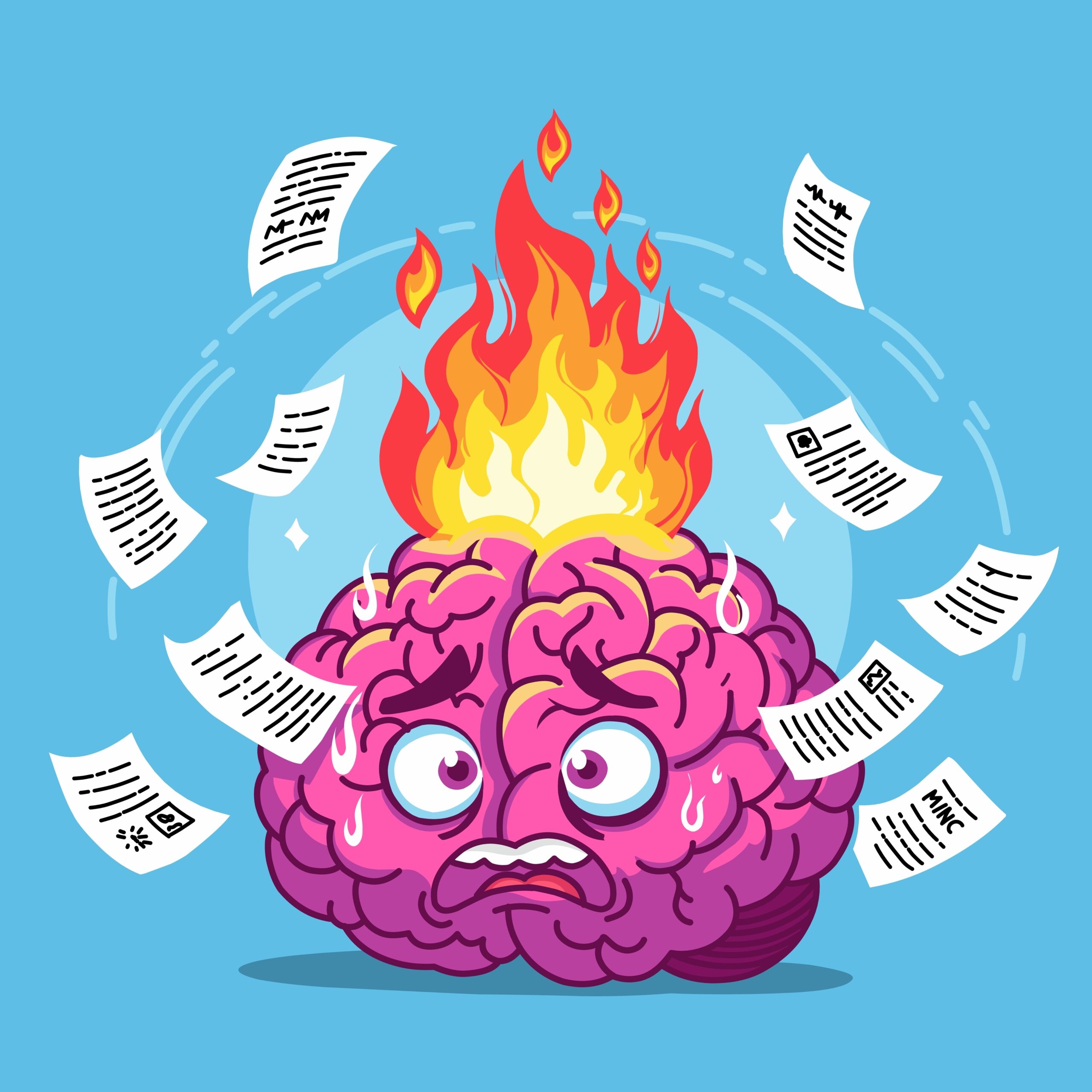
Why do I overthink everything I say?…….You walk away from a conversation that seemed completely normal.
Nothing dramatic happened.
No one appeared upset.
There was no conflict.
And yet your mind starts reviewing it.
“Why did I say that?”
“That sounded awkward.”
“I talked too much.”
“They probably noticed.”
Now the conversation is replaying in your mind like a recording that refuses to turn off.
You analyze tone.
You question your wording.
You mentally edit what you should have said.
You even imagine how the other person might be replaying it too.
And the more you think about it, the more uncomfortable it feels.
If this happens to you, you are not alone.
This pattern shows up most often in people who are thoughtful, relationally aware, and emotionally tuned in. The irony is this:
The very traits that make you good in relationships can also make you more vulnerable to overthinking them.
Why Do I Overthink Everything I Say? (Direct Answer Section)
Overthinking conversations happens when your brain’s threat detection system interprets a social interaction as uncertain or potentially risky.
Instead of filing the interaction away as complete, your brain flags it as:
“Review this. Something might be off.”
So it replays it.
Not because you lack confidence—but because your brain is trying to prevent:
- rejection
- embarrassment
- disconnection
- loss of belonging
The mind believes:
“If I can figure this out, I can avoid future pain.”
But instead of solving anything, the replay keeps your nervous system activated—creating a loop that feels hard to shut off.
Why the Brain Replays Conversations (Deep Psychoeducation)
Your brain is constantly scanning your environment for one core question:
“Am I safe right now?”
This question includes more than physical danger.
It includes:
- emotional safety
- relational security
- social belonging
At the center of this system is the amygdala, part of your limbic system.
The amygdala works like an alarm system:
- It scans for threat
- It reacts quickly (before logic kicks in)
- It prioritizes protection over accuracy
Here’s the key:
The amygdala does not wait for proof. It reacts to possibility.
So if there is even a slight sense of:
- awkwardness
- tone shift
- delayed response
- perceived disinterest
…it can flag the interaction as uncertain.
Once that happens:
- The amygdala activates
- Your nervous system shifts into alert mode
- Your thinking brain (prefrontal cortex) tries to make sense of it
- The mind replays the conversation looking for “what went wrong”
This is where overthinking begins.

I Overthink Everything I Say. The Nervous System’s Role (Why It Feels So Hard to Stop)
Overthinking is not just a thinking problem.
It is a body + brain loop.
When your nervous system detects possible social risk:
- Heart rate may subtly increase
- Muscles hold slight tension
- Attention narrows
- The body prepares for “something being wrong”
Even if you don’t consciously feel anxious, your system is slightly activated.
And here’s the important part:
An activated nervous system demands resolution.
So your brain tries to solve the discomfort by thinking.
But thinking doesn’t calm the body.
So the body stays activated.
So the brain keeps thinking.
That’s the loop.
The Conversation Replay Loop (Conditioning Pattern)
Over time, your brain learns patterns through repetition.
Here’s how the loop gets reinforced:
- You replay a conversation
- You feel a brief sense of relief (“I figured something out”)
- Your brain registers that replaying = helpful
- The behavior gets reinforced
This is called negative reinforcement.
You’re not rewarded with peace—you’re rewarded with temporary relief.
And your brain starts to depend on that process.
Eventually, the replay becomes automatic.

How Cognitive Distortions Fuel the Loop
During replay, your brain is not neutral.
It is often using distorted thinking patterns such as:
- Mind reading → “They think I’m awkward”
- Magnification → “That one comment ruined everything”
- Personalization → “It must have been something I did”
- All-or-nothing thinking → “That whole conversation was bad”
These distortions fill in missing information with assumptions.
And your brain treats those assumptions like facts.
This increases emotional intensity—even when nothing actually went wrong.
How Attachment Patterns Influence Overthinking
Attachment theory explains why this loop feels stronger for some people.
If early relationships taught you that connection was:
- inconsistent
- unpredictable
- dependent on behavior
your brain may have learned:
“I need to monitor relationships to keep them.”
This creates a heightened sensitivity to:
- tone changes
- pauses
- facial expressions
- perceived shifts in connection
So after a conversation, your brain asks:
- “Did I say too much?”
- “Did I say the wrong thing?”
- “Are we still okay?”
This is not weakness.
It is learned relational vigilance.
The brain is trying to prevent loss—but ends up creating internal pressure instead.
Why Positive Thinking Doesn’t Stop Overthinking
Many people try to interrupt the loop with logic:
“It was fine.”
“I’m overthinking.”
“They don’t care.”
But this often doesn’t work.
Why?
Because your system is still activated.
Think of it this way:
- The thinking brain wants to move on
- The emotional brain is still scanning
If your body still feels uncertain, your brain will continue searching.
You cannot out-think a nervous system that still feels unsafe.
That’s why regulation comes first.
How to Calm the Nervous System First
1. 6–8–10 Breathing (Physiological Reset)
- Inhale for 6
- Hold for 8
- Exhale for 10
Long exhales stimulate the vagus nerve, which activates the parasympathetic system.
This tells your body:
“You are not in danger.”

2. Scan for Large Objects (Visual Field Expansion)
When the brain senses threat, vision narrows.
This is called tunnel vision.
By intentionally looking for large, stable objects, you:
- widen your visual field
- interrupt threat scanning
- signal environmental safety
3. Apply Physical Pressure (Proprioceptive Input)
Pressure-based input helps regulate the nervous system by:
- increasing body awareness
- grounding attention
- reducing mental looping
This pulls you out of mental replay and back into present-moment experience.
The Sequence Matters: Body First, Then Brain
To break the overthinking cycle, the order has to change.
Most people try to start with their thoughts.
They jump straight into:
- “That wasn’t a big deal”
- “I’m overthinking”
- “I need to stop this”
But when your nervous system is activated, your brain is not in a state where it can receive that logic.
So the real sequence looks like this:
1. Calm the body (limbic system)
2. Then engage the thinking brain (prefrontal cortex)
Not the other way around.
Why the Order Matters So Much
When the limbic system is activated, your brain shifts into a state of protection.
In this state:
- your brain prioritizes safety over accuracy
- your body prepares for possible threat
- your thoughts become more narrow and critical
- your ability to think flexibly decreases
This means you are not thinking clearly—you are thinking defensively.
So when you try to apply logic too early, it feels like it doesn’t “stick.”
Because your brain is still asking:
“Am I safe yet?”
Until that question is answered in the body, the mind keeps searching.
What It Actually Means to “Calm the Body”
Calming the body does not mean forcing yourself to relax.
It means sending signals of safety back to the nervous system.
When you do this consistently—even in small ways—your system begins to shift out of alert mode.
You may notice:
- your breathing slows without forcing it
- your shoulders drop slightly
- your chest feels less tight
- your mind feels less urgent
- the need to “figure it out right now” softens
This is not instant.
It’s gradual.
But even a small shift matters.
What Changes in the Body First
As your nervous system begins to settle, several physiological changes happen:
- Heart rate slows → your body no longer feels like it needs to stay on alert
- Muscle tension decreases → especially in the jaw, shoulders, and chest
- Breathing regulates → becoming deeper and more rhythmic instead of shallow
- Stress hormones begin to lower → reducing that internal “on edge” feeling
- The sense of urgency drops → you no longer feel like you have to solve something immediately
This is your body moving from survival mode into regulation mode.
And this shift is what allows your brain to function differently.
What Happens in the Brain When the Body Settles
Once your body begins to feel safer, something critical happens neurologically:
The prefrontal cortex comes back online.
This is the part of your brain responsible for:
- logical thinking
- perspective
- emotional regulation
- balanced interpretation
- decision-making
When it’s active, you can:
- consider multiple possibilities
- question your assumptions
- recognize cognitive distortions
- respond instead of react
Before this point, those abilities are limited.
After this point, they return more naturally.
Why You Can’t Skip This Step
Trying to “think your way out” before your body settles is like:
- trying to have a calm conversation during an alarm
- trying to solve a problem while your system feels under pressure
- trying to be rational while your brain is still scanning for danger
Your brain will keep pulling you back into the loop because the underlying activation hasn’t resolved.
This is why people often say:
“I know I’m overthinking… but I can’t stop.”
They are not lacking insight.
They are working against their nervous system.
What It Feels Like When the Shift Happens
When you follow the correct sequence (body → then brain), the shift is noticeable:
Before:
- thoughts feel loud and convincing
- urgency feels high
- your brain keeps searching
- everything feels personal and important
After:
- thoughts feel quieter
- urgency decreases
- your brain stops pushing for answers
- perspective widens
You may even notice a natural thought like:
“This actually might not be a big deal.”
And this time—it feels believable.
Not forced.
The Key Takeaway
The goal is not to immediately fix your thinking.
The goal is to change the state your brain is operating in.
Because your thoughts are shaped by your state.
If your state is anxious, your thoughts will follow.
If your state is regulated, your thoughts will shift with it.
A Simple Reframe to Remember
Instead of asking:
“How do I stop thinking about this?”
Shift to:
“What does my body need right now to feel safe?”
Because once your body feels safe—
Your brain will stop trying so hard to solve the problem.
And the replay will begin to fade on its own.

Faith Integration (Anchoring the Process)
This process also reflects something deeper.
We are not called to force control—we are called to return to steadiness.
“Be still, and know that I am God.” — Psalm 46:10
Stillness is not just spiritual—it is physiological.
When your body becomes still, your mind follows.
And when your mind settles, truth becomes easier to access.
You don’t have to fight your thoughts into submission.
You learn to create the conditions where peace can return.
Grace first. Growth follows.
Other Articles You Might Be Interested In:
Why reassurance feels helpful, but it backfires.
Frequently Asked Questions
Is replaying conversations a form of anxiety?
Yes. It is a common form of rumination, often linked to social anxiety. The brain attempts to reduce uncertainty by reviewing interactions, but instead of resolving the experience, it keeps the nervous system activated.
Why does my brain focus on what I did wrong instead of what went well?
This is called negative bias. The brain is wired to prioritize potential problems over neutral or positive moments because it is trying to prevent future harm—not reinforce confidence.
Why does overthinking feel automatic?
Because it is learned. Each time you replay a conversation and feel even slight relief, your brain strengthens that pathway. Over time, it becomes an automatic mental habit rather than a conscious choice.
Why does it happen more at night?
At night, distractions decrease and your brain shifts into processing mode. Unresolved social interactions are more likely to surface when your environment is quiet and your mind has more space.
Why do I assume people are judging me?
This often comes from mind reading, a cognitive distortion where the brain fills in missing information with negative assumptions. It can also be linked to past experiences where judgment felt real or impactful.
Is overthinking the same as being self-aware?
No. Self-awareness helps you understand yourself. Overthinking keeps you stuck analyzing yourself without resolution. One creates clarity; the other creates anxiety.
Why can’t I just “let it go”?
Because your nervous system hasn’t settled yet. Letting go is not just a mental decision—it requires your body to feel safe enough to stop scanning for answers.
Does overthinking mean I lack confidence?
Not necessarily. Many highly capable and socially aware people overthink. It is less about confidence and more about how strongly your brain is wired to monitor social outcomes.
Why do I replay even small conversations?
Your brain is not measuring importance—it is measuring uncertainty. Even small moments can trigger replay if they feel unclear or slightly “off.”
Can overthinking actually make anxiety worse?
Yes. While it feels like problem-solving, it reinforces the belief that something is wrong, keeping your nervous system activated longer.
What role does the amygdala play in overthinking?
The amygdala detects potential social threats and activates your nervous system. Once activated, your thinking brain tries to “solve” the discomfort by replaying the interaction.
Why does my body feel tense even after the conversation is over?
Because your nervous system hasn’t returned to baseline. Your body is still holding onto the possibility that something went wrong.
Is this connected to attachment style?
Often, yes. Anxious attachment can increase sensitivity to relational shifts, leading to more frequent monitoring and replaying of interactions.
Why do I feel like I need certainty about what happened?
Your brain prefers certainty over ambiguity. When something feels unclear, it keeps searching for answers—even if those answers are assumptions.
Does social media make this worse?
Yes. Delayed responses, lack of tone, and limited feedback increase uncertainty, which can trigger more mental replay and interpretation.
Can overthinking affect my relationships?
It can. It may lead to overanalyzing, reassurance-seeking, or withdrawing due to assumed negative outcomes that may not actually be present.
What is the difference between reflection and rumination?
Reflection is intentional and leads to insight.
Rumination is repetitive and leads to distress without resolution.
Why do I feel embarrassed hours later?
Because your brain is reactivating the emotional memory as if it is happening in real time, even though the moment has passed.
Can I train my brain to stop doing this?
Yes. Through repeated practice of nervous system regulation and cognitive restructuring, you can weaken the replay habit and build new patterns.
How long does it take to change this pattern?
It varies, but consistent practice over weeks to months often leads to noticeable improvement in both intensity and frequency.
Is this related to perfectionism?
Often. If your brain holds a high standard for how you “should” show up, it is more likely to review interactions looking for mistakes.
Why do I feel like one small mistake defines the whole conversation?
This is called magnification. The brain zooms in on one detail and ignores the larger, more balanced reality of the interaction.
What happens if I don’t engage in the replay?
Initially, you may feel more discomfort. Over time, your brain learns that replay is not necessary for safety, and the urge decreases.
Why does reassurance not help long-term?
Reassurance provides temporary relief, but it teaches the brain to depend on external validation instead of building internal stability.
Can faith actually help with overthinking?
Yes. Faith shifts identity away from performance and toward being grounded in something stable. This reduces the pressure to “get everything right” socially.
What does a “sound mind” really mean in this context?
A sound mind is not a silent mind—it is a steady one. It allows thoughts to exist without letting them define your identity or control your emotional state.
Will I ever completely stop overthinking?
The goal is not perfection. The goal is reducing intensity, frequency, and impact so that thoughts no longer control your sense of peace.
Reader Disclaimer
At Eternal Hope Christian Counseling, our content is written from a faith-integrated, clinically informed perspective. The information shared is for educational purposes only and is not a substitute for individualized mental health treatment, diagnosis, or medical advice. If symptoms worsen or distress increases, please seek support from a licensed mental health professional. Healing is a process — Grace First, Growth Follows.